Jump to content

Comparing Trad Black Inks and IG for UV Lightfastness (Testing Herbin, Lamy, Platinum, Diamine, Waterman, and Pelikan)


arcfide

Recommended Posts

I wanted to try to rank order the UV lightfastness of various traditional black, dye-based inks that I have to see which ones held up. For this test, I tested the following:


  1. Platinum Red
  2. Platinum Classic Cassis Black
  3. Herbin Bleu Nuit
  4. Platinum Blue Black
  5. Diamine Registrar's
  6. Lamy Crystal Benitoite
  7. Waterman Black
  8. Pelikan 4001 Brilliant Black
  9. Herbin Perle Noire
  10. Lamy Black
  11. Platinum Dyestuff Black
  12. Platinum Mix-free Smoke Black


The inks were tested on LIFE L Writing Paper in a South facing window between 8/7/2022 and 10/2/2022. Here is the summary:


  • Japanese trad-blacks (Sailor Black, Platinum Black) both appear to use a distinctly different dye than other inks and also exhibit above average UV resistance to discoloration, but I do not have a rank ordering to put Platinum or Sailor above one or the other for UV resistance. They are both quite above average in this regard. On the other hand, both are considered "softer" blacks in normal use, with Platinum Black being somewhat drier and Sailor Black being somewhat wetter. 
  • The European Blacks all degrade in a similar manner, and I suspect have similar dye components based on chromatography testing. Among these, Waterman and Lamy tend to appear a more bright black to me, but are less UV resistant, whereas Pelikan 4001 and Herbin Perle Noire both faire slightly better, with Pelikan 4001 appearing to be the best among these.
  • The IG-based inks all show strong UV resistance relative to traditional dyes, and similar decay rates to the traditional dye-based black inks. They are not, of course, UV-proof. Registrar's behaves on par with the Japanese dye-based blacks provided that it is applied wetly enough. Platinum's Cassis Black and Blue Black both have a strong showing, along the lines of Pelikan 4001 in this test, but probably not quite as strong as the Japanese dye-based black inks.
  • Lamy Benitoite has more UV resistance than typical dye-based inks, but less than most of the others in this test. However, it also exhibits above average water resistance. This makes it technically more document proof than Lamy Black, but if you wanted to use a Lamy ink for archival purposes and did not care about water damage, then I would probably lean towards Lamy Black more than Benitoite, though neither is a terrible choice, IMO, keeping in mind that none of them are up to the standards of a true archival certification.
  • Cassis Black is a very dark red when in normal use with a wet application, but it is one of the few red inks that has any sort of strong UV resistance. Most red inks tend to fade very rapidly, as evidenced by the very fugitive Platinum Dye-based Red ink used as a comparison. There are other dye-based red inks that do better without going Cellulose Reactive, but the choices are much reduced. 
  • Herbin Bleu Nuit can often have a similar color on the page as Platinum Blue Black when initially applied and allowed to dry a bit coming out of some pens, but the difference in archival qualities is quite stark. 


y4mhbfhcOpB7WbheEV4FDUAx_c2AR84F5L0al-XIy4mJZWQ1iKk4N3cP9BAmmRdQXR91PHsU3Z1F9U_B

Link to comment
Share on other sites

  • Replies 12
  • Created
  • Last Reply

Top Posters In This Topic

  • arcfide

    5

  • LizEF

    2

  • inkstainedruth

    1

  • TSherbs

    1

Top Posters In This Topic

Posted Images

Interesting.  In my experience IG inks are not particularly UV resistant.  I wasn't overly impressed with Diamine Registrar's in general when I tried a sample of it a few years ago.  Wondering now if I got a bad batch of it, and whether I should try it again.

Ruth Morrisson aka inkstainedruth

"It's very nice, but frankly, when I signed that list for a P-51, what I had in mind was a fountain pen."

Link to comment
Share on other sites

1 hour ago, arcfide said:

Sailor Black

Erm... I don't see this in your list of 12 inks, and I only see 12 lines in the images...  I do see two different Platinum inks...


Meanwhile, I declare #4 the winner and #2 the runner up. ;) :D


Thanks for sharing your results!

Link to comment
Share on other sites

1 hour ago, inkstainedruth said:

Interesting.  In my experience IG inks are not particularly UV resistant.  I wasn't overly impressed with Diamine Registrar's in general when I tried a sample of it a few years ago.  Wondering now if I got a bad batch of it, and whether I should try it again.

Ruth Morrisson aka inkstainedruth


I think it's all relative. If you compare an IG ink against your traditional dye-based colored inks, I think in general they tend to do much better, but there are some dye-based inks that are more modern which do quite well (even without the cellulose reactive stuff). Diamine Registrar's in a sample form, IME, goes "bad" very easily, which really just means that the IG precipitates out and you get mostly a pale, dye-heavy, IG-light result. Compare this to the relatively dark line that you get from the Registrar's in the above, which was wetly applied. Compared against traditional dye-based inks, IG has a pretty good UV resistance, but that doesn't mean it's close to the very high UV resistance that you can see in pigmented or Cellulose reactive inks. You can see that the Registrar's ink is still fading in this test, and it will continue to fade and brown over time, but it's still holding strong at this point (all the IG, in fact) compared to the traditional dye-based colored inks. 


My point of putting the IG inks in this test was really as a control metric against the dye-based black inks, which were the real inks I wanted to test here. The IG inks represent a type of ink that I know will fade over time, but not one that fades very quickly relative to typical inks. This allows me to calibrate whether the dye-based black inks that I'm testing here fade at a rate closer to that of IG or more UV resistant dye-based inks, or whether they fade at a rate closer to that of the very fugitive dye-based inks. 


The reason I had this question in the first place was that it occurred to me that we might be able to examine some inks, such as IG blue inks, in light of them being designed to be relatively resistant and archival compared to other blue inks, but that such relative durability might still be less durable than a totally different color (black, in this case) which uses dyes. Thus, it got me wondering about the overlap across ink compositions and colors. That is, each color presumably may have a spectrum of durabilities across the various compositions for making that color, and I was interested to see how these spectrums/ranges overlapped with each other across the color dimension. 

Link to comment
Share on other sites

2 minutes ago, LizEF said:

Erm... I don't see this in your list of 12 inks, and I only see 12 lines in the images...  I do see two different Platinum inks...


Meanwhile, I declare #4 the winner and #2 the runner up. ;) :D


Thanks for sharing your results!


It's not. Sailor Black is an ink that I have tested previously with other inks, and I happen to know that while it does eventually fade, it showed remarkably similar UV resistance compared to other blacks in that test, and mimicked the test results that I saw from the Platinum Black, which might make sense given that the chromatography between the two inks, IIRC, seem to be closer than they are different. I suspect that if I did this test with standard Pilot Black that I might end up with the same result. I suspect that there is something in the way that the Japanese are making their standard black inks which leads them all to have a similar soft black color as well as having a relatively good UV resistance. I'm not sure which one would come out on top though, and I'm curious to try all three in a head to head comparison. 


However, I have to disagree with your declaration. I think you're just biased towards the colors! :) They did well, but are clearly fading in the way that IG inks do, and they are only slightly better than some of the black inks in person, and probably a little worse than the Platinum Black inks. Now, if we want to talk overall balance between beautiful colors and UV resistance, well...I won't argue with you there. Platinum Blue Black has to be in my list of top 3 inks, I think, and Cassis Black, if you apply it heavily, makes a great dark red ink with water and UV resistance. 

Link to comment
Share on other sites

Oh, and I feel I have to say that Platinum Red is quite a pleasant color. I need to defend it, I feel, because so many people seem to dislike this kind of bright, slightly orange red, but I think it really pops, and it's quite nice, if only it had any durability at all. 🙂

Link to comment
Share on other sites

42 minutes ago, arcfide said:

Sailor Black is an ink that I have tested previously

Ah!  Thank you for clarifying. :)


43 minutes ago, arcfide said:

I think you're just biased towards the colors!

😇  I'm innocent! Innocent, I tell you!  ( :blush:  OK, fine, you caught me.  Were there black inks in there?  I don't think I noticed... :lol: )

Link to comment
Share on other sites

@arcfide Thanks for the test! Always nice to see more tests like these.

“Travel is  fatal to prejudice, bigotry, and narrow mindedness, and many of our people need it sorely on these accounts.” – Mark Twain

Link to comment
Share on other sites

@arcfide, thanks for posting this. I enjoy all these comparisons. My writing is not usually exposed to UV light and doesn't really have to be archival. Some of it would be better off if it faded quickly. I need to fill up a pen or two with Platinum Red. 

"One can not waste time worrying about small minds . . . If we were normal, we'd still be using free ball point pens." —Bo Bo Olson


"I already own more ink than a rational person can use in a lifetime." —Waski_the_Squirrel


I'm still trying to figure out how to list all my pens down here.

Link to comment
Share on other sites

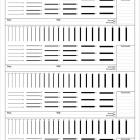
Thank you for doing this rather tedious test. It provides a lot of useful information. I have taken the liberty of presenting the result in a format that facilitates visual comparison.11.png.801201d2dd12edd32da7ea46afd6fd81.png

Link to comment
Share on other sites

Thanks for taking the time to do that comparison graphic! Just keep in mind that the right side of the page was intentionally swatched to be less saturated than the left side, so the right sides will have started off lighter to begin with in addition to the UV exposures. 

Link to comment
Share on other sites

Thank you for the test!  What a performance contrast between the two Herbins.


Cliff

“The only thing most people do better than anyone else is read their own handwriting.”  John Adams

Link to comment
Share on other sites

Create an account or sign in to comment

You need to be a member in order to leave a comment

Create an account

Sign up for a new account in our community. It's easy!

Register a new account

Sign in

Already have an account? Sign in here.

Sign In Now


×
×
  • Create New...