Jump to content

Pens Drying Out


psimpson130

Recommended Posts

I have searched the forums and looked at many comments on why the pens are drying out. I live in Arizona, I know, it's dry, and have a problem with all of my pens except one. This is year round - even when it is cooler and during our high humidity monsoon season. They keep drying out. I use the appropriate manufacturers cartridges (Lamy in the Lamy's; Waterman in the three Waterman Phineas, and Parker in the Parker - all black ink). My pens are all in the sub $100 range. When not in use, they are all stored nib-up as per the manufacturers' instructions. After I get them working, they will work fine, then after 10-15 minutes of capped, non use I have to go through the whole process again of getting the pen restarted. Parker replaced the pen as they said it was defective.


Now, here is the funny part - the only pen that writes first time, every time, no longer how long it has been since it was last used, is my disposable $4 Pilot Varsity fountain pen. I guess it is because it is a sealed system.


I love the feel of a fountain pen and especially the looks of folks when I use one. I am a mirror-imaged right hander (lefty who writes below the line and doesn't smear). Oh, and I found a cheap pen with a left-handed nib (just to say I have one).


Any other ideas?


Paul

Link to comment
Share on other sites

  • Replies 27
  • Created
  • Last Reply

Top Posters In This Topic

  • pajaro

    4

  • psimpson130

    4

  • cattar

    3

  • virgilio

    2

Some pens seal better than others, like the Pilot Varsity.

Those pens that don't seal well will dry out over time. As the water from the ink evaporates, the ink solids stick to the feed and narrow the ink channel. Eventually the clogged ink will need to be soaked and flushed.


If you want to keep more pens inked than you use daily, consider placing them in a sealed container when not in use. Rubbermaid is good.

Link to comment
Share on other sites

Some pens seal better than others, like the Pilot Varsity.

Those pens that don't seal well will dry out over time. As the water from the ink evaporates, the ink solids stick to the feed and narrow the ink channel. Eventually the clogged ink will need to be soaked and flushed.


If you want to keep more pens inked than you use daily, consider placing them in a sealed container when not in use. Rubbermaid is good.

For on the desk storage, that would help slow down the drying. However, the pen will dry out if I write, then cap it for say 15-20 minutes and try to write again. Becomes a real hassle if you are sitting in a meeting and trying to take notes.

Link to comment
Share on other sites

European pens that might be used by children require a hole in the cap to prevent suffocation if swallowed.

The Waterman Phileas pens have a large hole under the clip attachment. I have Phileas pens. The ones I haven't sealed, I dip in water in the morning and they start and write all day, even for meeting notes and even when left capped most of the day.

Parkers and Lamys don't seal as well as most Pilots, but they seal better than a Phileas.


What you're describing - write with the pen, cap for 15 minutes, then can't write with the pen - shouldn't be a problem with any of these pens.

It sounds like there's old dried ink in the feeds from the pens sitting and drying out over time. You can get a pen with a clogged feed to write, but it won't write reliably. To clear the feeds in modern pens, soak the entire nib/feed/section unit in water, and change the water daily. Expect to do this for at least a week or two until there is no ink in the water after a day of soaking.


Consider a Platinum Preppy or Plaiser, they both have a spring-loaded inner cap seal that's very effective. The Pilot Petit1 also seals very well. Some people like the Pilot Metro/Cocoon.

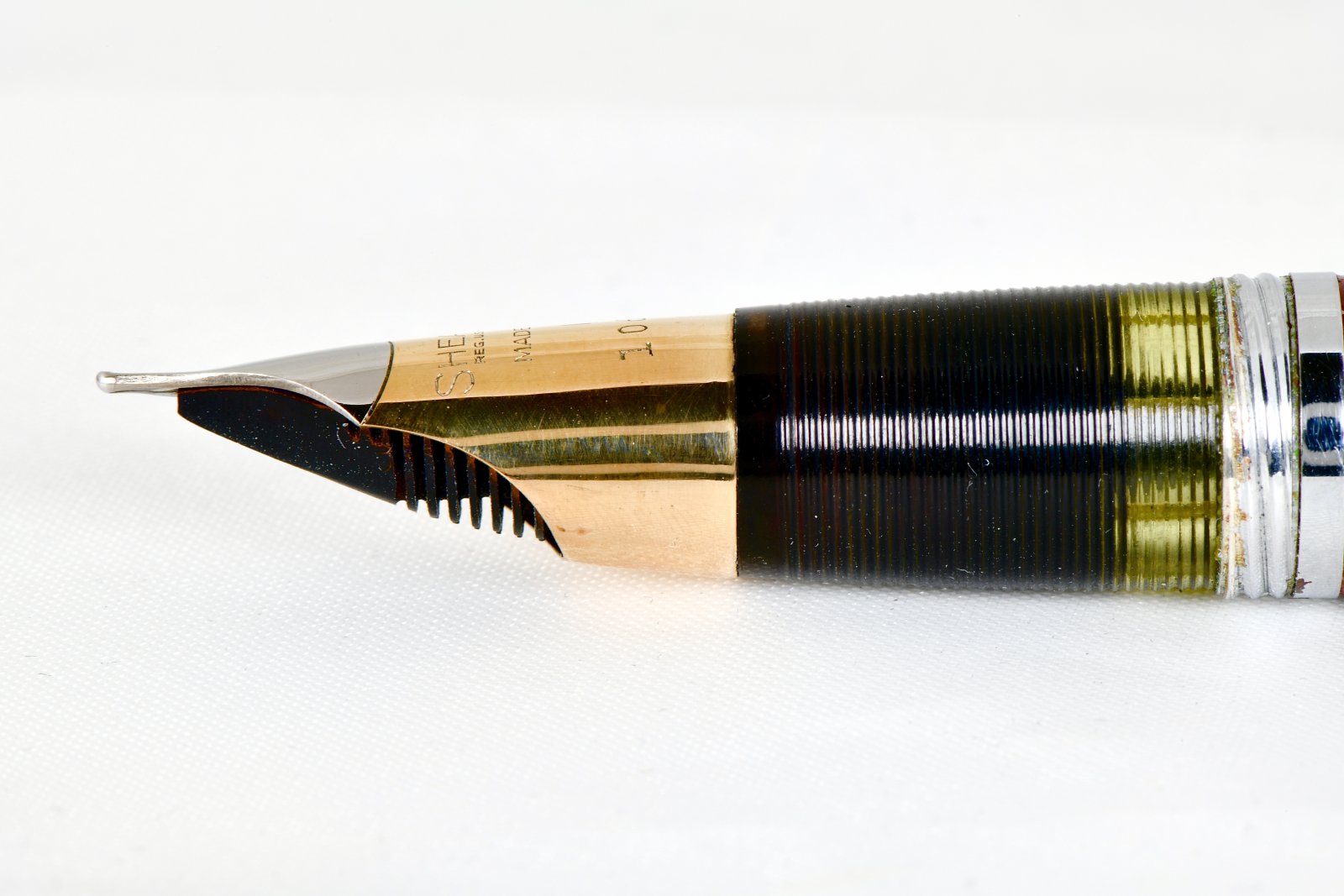
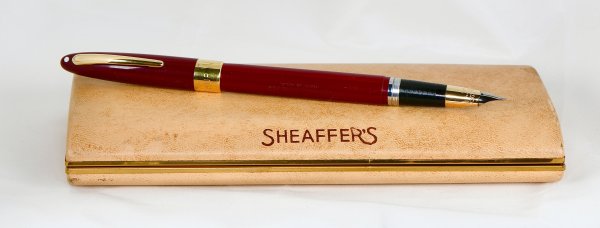
In vintage pens, Sheaffer touchdowns tend not to dry out.

Edited by cattar
Link to comment
Share on other sites

The Preppy is a higher class version of the Varsity which I have and it writes first time, every time. In the past I have gone the long term soaking of the nib assembly in distilled water, but it still didn't clear up the issue. I will try it again to see if I have any better luck. I will also move away from black inks as I saw several posts about Parkers having issues with their blank inks drying out faster.


I just ordered a Metro with some blue/black ink to see if that will help.


Thanks for your inputs.

Link to comment
Share on other sites

Among pens that resist drying out are Pelikans, any of the piston fillers. Some are under a hundred dollars. You would probably want at least an M200 size.

"Don't hurry, don't worry. It's better to be late at the Golden Gate than to arrive in Hell on time."
--Sign in a bar and grill, Ormond Beach, Florida, 1960.


Link to comment
Share on other sites

I have found that some pens really just like to be kept on their sides not nib up. Other pens nib up is totally fine. But none of them should have an issue being nib up after only 15min! I think the suggestion you might have some dried ink or something creating a partial clog is a good one.

Laguna Niguel, California.

Link to comment
Share on other sites

I have the same problem here in Western Austalia. I have been enjoying using all my pen these past few months of winter but will soon clean them out and store away until next year. The pens which do not dry out for me, that I will keep inked right through summer, include the Platinum Preppy, Plaisir, Platinum ones with slip seal caps, Rotring Art pens and TWSBI Eco.

Will work for pens... :unsure:

Link to comment
Share on other sites

I also suffer from oens drying out. I agree with Amanda: my Platinums are the best at resisting drying out, my Plaisir has been working flawlessly so far. My Rotring art pen is also very reliable.


Other pens that have been resisting drying out pretty well for me so far are the Kaweco Liliput, Lamy Logo, and FPR Triveni. Most of my other pens will dry up after a few days at best.

Link to comment
Share on other sites

Most of my pens will dry out in a few hours to overnight. Some pens will stay moist and writable longer: Parker 51, Pelikan M200, M400, M600 and M300 that I have, Montblanc 144, Lamy 2000, Waterman Carene cartridge fed. Some pens will stay moist with the right ink (generally a wet ink). A great many modern C/C pens dry up on me. I use the ones that don't dry up easily and leave the other pens stored.


Some of the pens that dry up too fast for my taste work well for others, or so they report. Perhaps these other users have secrets to keep the pens writing. You can use wet inks. My problem with wet inks is that they also tend to put down a broader line. I like a thinner, fine to extra fine line, and I suppose this lets me in for some drying up of pens.

"Don't hurry, don't worry. It's better to be late at the Golden Gate than to arrive in Hell on time."
--Sign in a bar and grill, Ormond Beach, Florida, 1960.


Link to comment
Share on other sites

Yes, I agree about the Pilot Varsity. I think it's ink reservoir is a wick. However, part of the issue is the Pilot ink. Try Pilot black ink. In my Pilot Metropolitan , Pilot black ink allows a good degree of neglect. Pilot Metropolitan and Pilot Black ink is a good combination.

Auf freiem Grund mit freiem Volke stehn.
Zum Augenblicke dürft ich sagen:
Verweile doch, du bist so schön !

Link to comment
Share on other sites

Try this:


1. Soak the pen overnight in warm water to clear clogs (remove the cartridge of course). Cartridge pens tend to dry out and clog because there is no flow of ink during filling. Consider getting using a converter.


2. Store the pens horizontally, NOT vertically with nib up. This keeps the nib moist.


3. If all else fails, and the pen is a dry writer, add a small drop of Ivory Dish Detergent to the bottle of ink, using a syringe or a toothpick. Also, some ink is simply too thick; add a little distilled water to the ink, together with the detergent to keep up its slow rate.

Link to comment
Share on other sites

I agree with some of the earlier points folks have made. The fact that you are getting dry-out in 15 minutes instead of a couple of days--even in your climate--suggests that there is already accumulated dried ink in the feed. The fact that you use cartridges supports this theory--the feed never gets flushed out during filling. I would suggest you get either a converter or a simple ear-cleaning bulb, and use it to flush your pen repeatedly, first with a mild solution of household ammonia in water, and then with clean water. If this works and you continue to use cartridges, you may have to repeat this process once a month or so for each pen you have inked. Until you know if this is the problem, I would continue to store your pens nib-up. Lying them horizontally will just encourage more ink to coagulate in the feed channels.

Good luck--it's frustrating, but it is a solvable problem with most pens, and there is always the Platinum line or the magical Varsity. Or a little medicine bottle of water as part of your writing kit.

ron

Link to comment
Share on other sites

The fact that you are getting dry-out in 15 minutes instead of a couple of days--even in your climate--suggests that there is already accumulated dried ink in the feed. The fact that you use cartridges supports this theory--the feed never gets flushed out during filling. I would suggest you get either a converter or a simple ear-cleaning bulb,


Good point, Ron! I think it's almost certainly likely that it mostly explains many people's drying out issues. Maybe partly climate and/or improper or lax maintenance.


As I use cartridges for every pen except my Platinum SF(Platinum converters are rubbish but it's necessary for this to ensure the feed is fully saturated due to it's very dry nature), so I always keep the bulb syringe handy immediately before and after storage of pens.

Apart from a Lamy, I've never experienced any drying out issues.

Edited by Bluey
Link to comment
Share on other sites

Dried in 15 minutes, yikes! Indoors?? Don't have a Phileas but I did research them, they do seem to have evaporation problems, but I don't know if this bad. My two Sonnets do dry quickly, but this would imply mostly darker inks and some starting problems, the next day; I fixed them with wax on the cap, so I can attest that whatever solution there is for the Phileas will probably work (there are better looking solutions than wax, but it's what I have at hand).

"The trouble with the world is that the stupid are cocksure and the intelligent are full of doubt."


B. Russell

Link to comment
Share on other sites

i have a couple of hundred pens. Any more if the pen is one of those that dry too soon, I quit using it and use a more reliable pen.

"Don't hurry, don't worry. It's better to be late at the Golden Gate than to arrive in Hell on time."
--Sign in a bar and grill, Ormond Beach, Florida, 1960.


Link to comment
Share on other sites

I understand completely. I live in very dry environments as well (Northern Nevada and central Colorado).


Truthfully, I have given up using all of my Asian pens, which include my TWSBIs, Jinhaos, Picassos, Platinums, and Baoers. Only my Pilot Vanishing Points are reliable because they retract. I also can't use my Waterman and Sheaffer pens because of this. I only use them when I go on trips to humid climates. In fact, I have given all of my TWSBIs to my daughter who lives in Shanghai (and because she loves them so much).


The pens that do work all the time, every time are my Lamys, Montblancs, Deltas and Italix FPs. All of them are wet pens anyway.


But perhaps more importantly, I use bottled ink in cartridges (or in my piston fillers) almost all the time. I also thoroughly clean my pens weekly - yes, weekly. So, I only fill enough pens for that week. And I keep my filled pens horizontally in a pen case on my desk. If I need to carry one or two pens, they go in a pen case and into a horizontal pocket in my purse.


Some of my friends chide me on my "routine" and wonder if it is worth it. I think so, even in a dry climate!

"Today will be gone in less than 24 hours. When it is gone, it is gone. Be wise, but enjoy! - anonymous today


Link to comment
Share on other sites

These are two different issues. . . Drying out when capped for days or weeks versus drying out when uncapped for minutes. Although, Ron is correct in noting that the former problem will exacerbate the latter. I live in Texas, so it's not usually that bad here, but I am familiar with the phenomenon, and I do take note of which pens are most resistant to drying out.


TWSBIs, with their many O-rings, usually seal up very well. However, I've had far too many broken TWSBI parts to trust them anymore.


My two Karas Kustoms pens, the Ink and the Fountain-K, both made from aluminum, seal up extremely well when capped. They never seem to dry out. They're also not going to break!


My Edison and Bexley pens (and Gate City, made by Bexley) are next in line.


I also have one Peyton Street Pens hybrid with a Sheaffer Imperial inlaid nib unit, but the body and cap made by Bexley. It may have the best combination of sealing up well when capped, plus more cap-off time because feed and ink buffer is not exposed.

Link to comment
Share on other sites

My P51s, my vintage (20s'/30s') Duofolds as wel 40s'/50s' English NS, AF and aero Duofolds, my 50s' era Pelikans and my vintage MBs do not dry out on me. Generally, I don't use modern C/C pens except for some semi vintage pilots, platinums and Parker 75s/61s/45s.


My vintage lever and button filled pens of various brands/makes (Watermans, Sheaffers conklins, Parkers Conway Stewats and some other British brands), as well my Snorkel and Touchdown Sheaffers are near totally free of the nib drying out syndrome.

Khan M. Ilyas

Link to comment
Share on other sites

The reason for storing pens horizontally, and of course in a closed pen-case, is that the feed stays wet, so drying out is less of a problem. If you have doubts, just test all three possible methods (nib up, nib down, and horizontal) on each pen, and see which works best. No need to take someone else's word for it.


In my original post, read 'flow rate', not 'slow rate'.


It is generally dry-writing pens that dry out the quickest. But if a pen dries out in only 15 minutes, it may be due to a poorly-designed feed. If you read the history of the fountain pen, you will find that a great deal of its development had to do with properly regulating the ink flow.


I live in a very unusual part of South Carolina where there are periodic extreme droughts for months on end, but my really good pens (Italian Universals, Sheaffers, Hero 616s, etc) will go for many months without clogging. Even cartridge pens of the Sheaffer brand rarely clog, that is to say, dry out. But naturally NO pen will go forever without clogging, or rejecting the coating of some particular paper, or getting a paper fragment between the tines, and so on. And as I noted above, the wetness or dryness of the ink has a great deal to do with it.


To make an ink wetter, add a tiny drop or two of surfactant such as Ivory Dish Detergent. To make an ink drier, add a few milliliters of distilled water. As I mentioned, many modern inks are too saturated, e.g. Levengers Red, and will clog some pens. The public apparently is fascinated with intense colors, but this can sometimes result in clogging.

Link to comment
Share on other sites

Create an account or sign in to comment

You need to be a member in order to leave a comment

Create an account

Sign up for a new account in our community. It's easy!

Register a new account

Sign in

Already have an account? Sign in here.

Sign In Now


×
×
  • Create New...