Jump to content

Repair Tool Kit Recommendations


DrScott

Recommended Posts

Hello everyone!


After many years of collecting and several less than successful attempts at repairing pen issues with non-standard tools, I have decided that I'd like to put together a tool kit to do these repairs the "right way." There are a couple of basic things I understand I'll need to pick up -- rubber-coated section pliers, knock-out block, etc. -- but I wanted to get some expert advice on what should be in a basic pen repair toolkit.


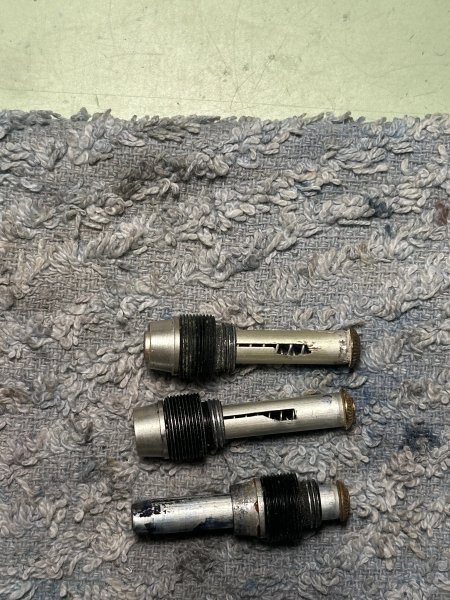
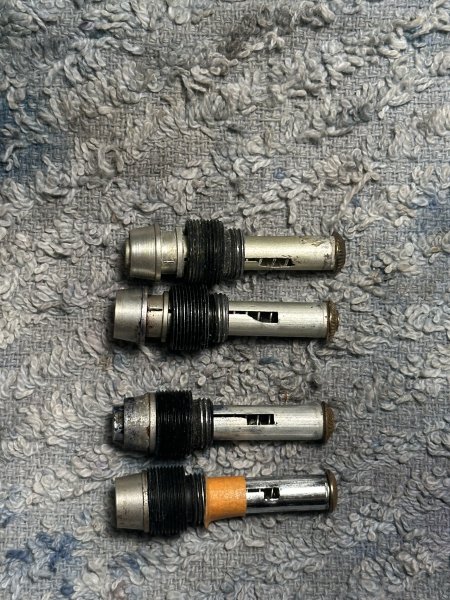
In addition to basic work on nibs and feeds, I'd also like to pick up a couple of specialized tools that can repair my Vacs and Aerometric Parker pens.


Can you guys give me some pointers on what a good kit would look like and where I should purchase these items from?


Thanks in advance!


-Scott

Link to comment
Share on other sites

  • Replies 11
  • Created
  • Last Reply

Top Posters In This Topic

  • Ron Z

    3

  • Glenn Atkins

    3

  • DrScott

    2

  • Larry Barrieau

    2

Top Posters In This Topic

Wow, quite a comprehensive list! I wish someone would sell a "repairing fountain pens for dummies" starter kit -- it is tough to pick up the tools from so many different vendors.


Thanks for the pointers!

Link to comment
Share on other sites

These articles will help. "Cheap Tools" 1 and 2 will tell you how to make some of your own tools. You certainly don't need to buy them all. Other articles will give you some tips in repairing.

spacer.png
Visit Main Street Pens
A full service pen shop providing professional, thoughtful vintage pen repair...

Please use email, not a PM for repair and pen purchase inquiries.

Link to comment
Share on other sites

IMHO, you do not need "section pliers."

Pliers allow you to easily use too much force, at the wrong angle, with little feedback, result = a cracked barrel.

For me, if I have to use a plier, I have not heated the barrel sufficiently to soften the plastic. And I risk cracking or sheering the barrel. Hence, I do NOT use a section plier.

Once you have sufficient experience, then the section plier (sparkplug boot puller) becomes another tool that the repair person "could" choose to use.


Think long and hard about tools.

- There are MANY tools, but some are so specialized that 99.99% of use would never use it, or know how to use it properly. Example, if you never restore a Parker vacumatic, don't buy the vacumatic tools, as you would never use them.

- Others are critical, such as magnifiers. You can't fix what you can't see. Or you won't know that cause of a problem if you can't see it. I have several different magnifiers; hand held magnifiers, loupes, and headband magnifier. A GOOD loupe is critical. In my case, a LIGHTED loupe, as I do not have a workbench with a GOOD light, I work on the kitchen table. The headband magnifier keeps both hands free when I need to use both hands to work on something. Tip, pen shows usually have POOR lighting, so carry a lighted magnifier.

- A GOOD adjustable lamp is critical. I can't tell you how hard it is to work with poor lighting.

- Other tools should be used with discretion. Example, do NOT knock out a nib unless you REALLY REALLY have to. As you could damage the nib/feed knocking it out, or you may not be able to put the nib and feed back in if the section has shrunk. Been there, done that, was not fun.

- Related to that are tools that would be used so little that you need to really think if you need it or not.

One such item is a nib block. If you need it, you need it. But most of the time you won't use it. Well, if you buy pens with bent nibs, you will. But you still need to learn how to properly use it.


As Ron said, MANY tools and stuff are "cheap."

- I use a $1 cookie tray (from the Dollar Store) to work on, so small parts don't go rolling onto the floor, and ink spills will be contained.

- A box of snack size zip-loc bags are invaluable to keeping things organized. So all the parts for a pen are kept together, not scattered all over your workbench to get lost or mixed up.


N-joy the experience.

Edited by ac12

San Francisco Pen Show - August 28-30, 2020 - Redwood City, California

www.SFPenShow.com

Link to comment
Share on other sites

And, to add to the list, with a full nod to Ron Z for the idea that you need function in your tools over price:


I put the sacs on my pens by using a pair of 75 cent tweezers with the ends ground smooth.

Crochet needles and old nut picks work just fine for removing sac pieces from a barrel.

I found a small bottle washer at Sur La Table that is perfect for cleaning the inside of a barrel.

Wal-mart sells an embossing gun for something like $17 that works fine, so long as you don't mind silver and purple for the color.

Wood dowels make very handy tools for all sorts of things, from a depth measure to determine appropriate sac length to a handy device for seating new O-rings in Sheaffer pens.

My most inventive tool is a fondue fork, which happens to be the perfect size for repairing Waterman Ink-Vue filler units.

Link to comment
Share on other sites

Fondue fork... I can see that would work. Until Dale Bebe started selling pen tools, there weren't many available. I still make tools from time to time because there isn't anything out there ready made. This is one of my favorites. It's a wrench for loosening the nut in the blind cap of a Wahl Doric plunger filler. It started out as a nail. Below it is a nail made into a pin punch for oversize feeds.

http://www.mainstreetpens.com/pix/nailtool.jpg

This is the tool in use...

http://www.mainstreetpens.com/pix/nailtoolused.jpg

Here are a few of the tools that I've made

http://www.mainstreetpens.com/pix/madetools.jpg


On top are my section pliers. I like these because when the rubber wears out, I just slap on a new piece of fuel line hose.


Below, L-R: chopstick for all kinds of things, tool for tightening the nut down on a twist fill Wahl, tool to disassemble a Sheaffer Lady Scripsert nib (hex key with a hole in the middle), pellet pusher, two Vac thread chasers, lever pin pusher, two feed punches (hollow - one for Vacs, one for Sheaffers), the Wahl tool, a Vac wrench, a tool to set the spring on the end of Wahl levers, a feed chaser (Roto-Rooter), eraser puller, Sheaffer plunger filler wrench #1 for the early plunger fillers, nib burnishing tool made from a stainless steel crib rail, Sheaffer plunger filler wrench for the aluminum nuts in later blind caps.


spacer.png
Visit Main Street Pens
A full service pen shop providing professional, thoughtful vintage pen repair...

Please use email, not a PM for repair and pen purchase inquiries.

Link to comment
Share on other sites

Ron, were the thread chasers difficult to make?


Looking for a black SJ Transitional Esterbrook Pen. (It's smaller than an sj)

Link to comment
Share on other sites

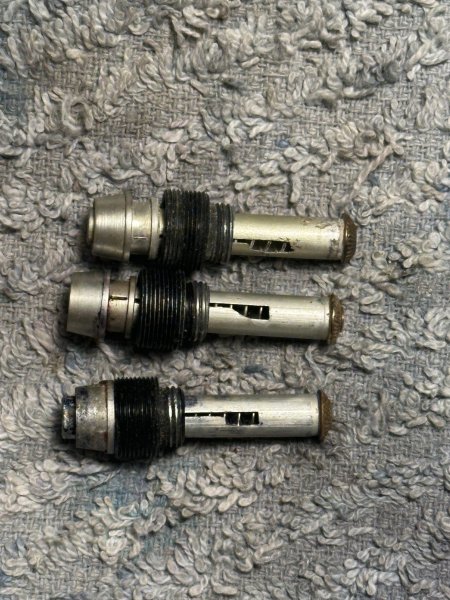
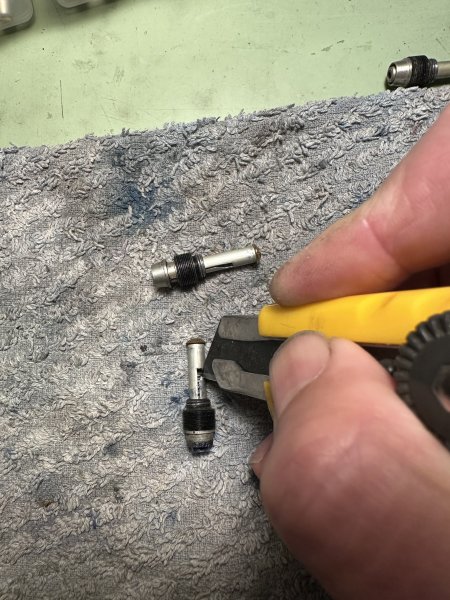
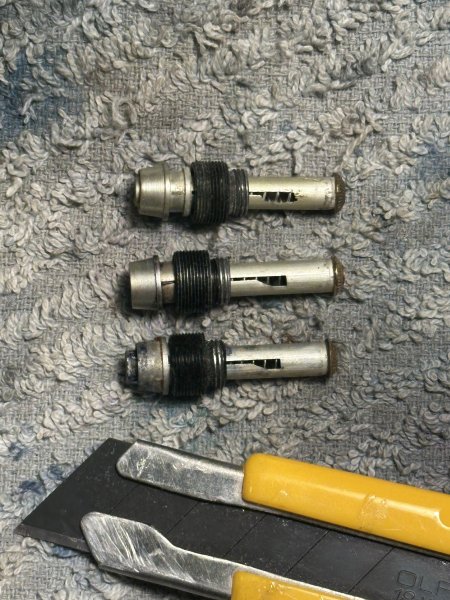
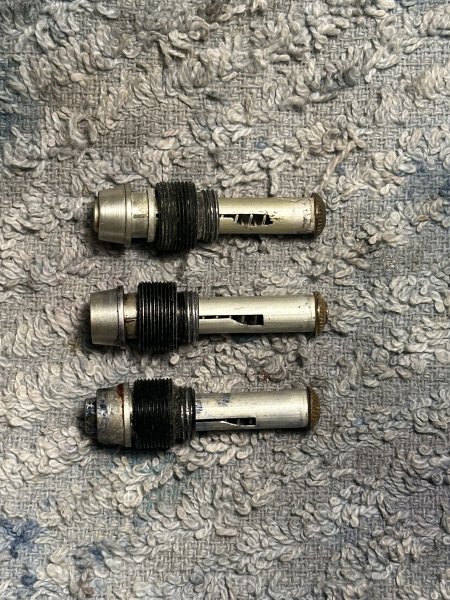
Not at all. Take the blind cap bushing from a dead filler. Using a round mini file, cut a notch across the threads. Thus gives a bit of an edge to cut the threads, and a place for the swarf to go. You can't cut new threads as you would with a tap, but they work very well to clean up damaged or threads filled with crud.

spacer.png
Visit Main Street Pens
A full service pen shop providing professional, thoughtful vintage pen repair...

Please use email, not a PM for repair and pen purchase inquiries.

Link to comment
Share on other sites

Create an account or sign in to comment

You need to be a member in order to leave a comment

Create an account

Sign up for a new account in our community. It's easy!

Register a new account

Sign in

Already have an account? Sign in here.

Sign In Now


×
×
  • Create New...