Jump to content

Young People Have Lost The Ability To Read Cursive.


andreasn

Recommended Posts

I'm a foreigner who never learned cursive.

Polish method of teaching handwriting in '80s started with upright alphabet. Most letters had “exit strokes” that allowed connected writing. There was no training designed to teach us cursive, pupils were just expected to speed up and loose rigidity of the model. (My dysgraphy stood in the way of acuqaring fast or ligible writing, therefore I've struglled to make notes throughout my education).


There is no tradition of writing in cursive in Poland. Italic is the preffered decorative style.


As a result a cannot read cursive easily. I can read it, but neural networks in my brain are not wired up to automate conversion of visual representations of letters into words.

It seems that the process involves:

  • "splitting" flow of curves into letter shapes.
  • recognizing letters (their shapes are not, what I'm used to).
  • processing recognized letters as usual.

As a result, a can read this text, but nowhere near 300 WPM (my usual speed when reading English language fiction).

I'm also not able to “scan” this text to find quickly if specific word or sequence of words is there.


I suppose, that some of exposition to cursive (i.e. learning to write cursive) would be needed to programm my brain to recognize “word shapes” of cursive writing, and speed up reading it.

Link to comment
Share on other sites

  • Replies 71
  • Created
  • Last Reply

Top Posters In This Topic

  • Manalto

    13

  • TXKat

    5

  • httpmom

    5

  • e-beth

    3

Top Posters In This Topic

Posted Images

As a Pole who speaks English, I'm sure you've been exposed to people who speak with an accent. Sometimes those accents are so strong that it makes them hard to understand (unless they're Polish, of course :) ) but in a short amount of time with the same person, we adapt to those variations in pronunciation and struggle much less to understand, our brains automatically making the corrections. I think the same thing applies to cursive; what first appears as tangled string becomes easier to read with familiarity. And, as with accents, the more variety you're exposed to, the more flexible you become in your ability to understand.

James

Link to comment
Share on other sites

I'm a foreigner who never learned cursive.

Polish method of teaching handwriting in '80s started with upright alphabet. Most letters had “exit strokes” that allowed connected writing. There was no training designed to teach us cursive, pupils were just expected to speed up and loose rigidity of the model. (My dysgraphy stood in the way of acuqaring fast or ligible writing, therefore I've struglled to make notes throughout my education).


There is no tradition of writing in cursive in Poland. Italic is the preffered decorative style.


As a result a cannot read cursive easily. I can read it, but neural networks in my brain are not wired up to automate conversion of visual representations of letters into words.

It seems that the process involves:

  • "splitting" flow of curves into letter shapes.
  • recognizing letters (their shapes are not, what I'm used to).
  • processing recognized letters as usual.

As a result, a can read this text, but nowhere near 300 WPM (my usual speed when reading English language fiction).

I'm also not able to “scan” this text to find quickly if specific word or sequence of words is there.


I suppose, that some of exposition to cursive (i.e. learning to write cursive) would be needed to programm my brain to recognize “word shapes” of cursive writing, and speed up reading it.

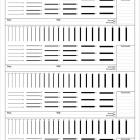
My experience was slightly different, as my 1-3rd. grade teacher did pay attention to cursive (slanted, joined handwriting), but the textbook used nont-slanted, joined letterforms. Here's a page from the book "Litery" I used in 1976.

http://mojeksiazeczki2.blox.pl/resource/LiteryCwiczenia004.jpg

---

Please, visit my website at http://www.acousticpens.com/

Link to comment
Share on other sites

"The lawyers who make these decisions about what to teach and what materials to use never read the the text books before approving them and seem to be completely unaware of the lack of substitutes for handwriting in mathematics and the sciences. "


Huh? Lawyers choosing curriculum?


Isn't it school boards that do that?

Link to comment
Share on other sites

"The lawyers who make these decisions about what to teach and what materials to use never read the the text books before approving them and seem to be completely unaware of the lack of substitutes for handwriting in mathematics and the sciences. "


Huh? Lawyers choosing curriculum?


Isn't it school boards that do that?

Link to comment
Share on other sites

I am, right now, trying to teach one of my ESL students how to read cursive. Do you recommend somewhere I can find good samples of relatively simple English written in a variety of styles?

Link to comment
Share on other sites

I am, right now, trying to teach one of my ESL students how to read cursive. Do you recommend somewhere I can find good samples of relatively simple English written in a variety of styles?

Google abecka cursive practice sheets. One of the homeschool references had three different styles (abecka, deneilian and something else). The words were simple. In addition to the initial practice sheets, I seem to recall that they also had sentences for copying.

Link to comment
Share on other sites

Where I am at (Texas), they have taken cursive writing out of the curriculum stating there is no need for it because everyone uses a computer!


Do NOT get me started on the backward thinking....ugh!!!! :gaah: :wallbash:


Here's to all of those thinking this was a great idea and wondering, when their own grandkids can't read a birthday card sentiment!! :glare:

North Carolina also. As a former Public Librarian, School Librarian and someone who has encountered students from elementary school to college, beyond a bad idea. Now, we have some children who do not know how to communicate if they do not text, do not know how to read, unless it is a text, and do not know how to write because it has been deemed obsolete. Why not ban learning? My error, already done with "Leave No Child Behind." O.K. done, this effects my sensibilities tremendously. :wacko: :angry: :bawl:

Ea Alis Volat Propiis, per/Repletus Fontis Calamus!
She Flies by Her Own Wings, with filled Fountain Pen


Delta DolceVita, F-C Intrinsic 02, Pelikan M800 red/black striation, Bexley ATB Strawberry Swirl, Red Jinhao 159, Platinum 3776 Bourgogne. :wub:

Link to comment
Share on other sites

Is this argument about cursive, or instead about joined-letter writing of ANY style versus printing individual letters?


Overall, I can only echo the experience of my college-professor colleague (vide supra).


Being human is in large part experiencing language aurally and graphically. Isn't it ironic, as we move toward a world with high degree of basic literacy that some of the important refinements of literacy fall by the wayside? Such as being able to write, as opposed to "keyboarding".


In the USA, not only have we abandoned the once common requirement of studying a second or third language, we seem to have given up on requiring some mastery of reading and writing one language! (Please do not try to tell me about the importance of teaching programming languages universally in schools, either; while important and perhaps vital, they are not standard human languages, per se, and we should show respect for the amazing skills developed by good professional programmers who should be left to do their jobs. Oh yes -I have written programs in BASIC and several versions of C.)


Where has it been shown that moving almost all of our writing to a digital platform is a great advance in learning? Why is this this all viewed in zero sum terms? Shouldn't being able to read and write both print and joined-letter handwriting be a necessary part of becoming "literate"? Along with -of course- competency in using the desktop computer?


The major change I've seen in over 30 years of college teaching, and many years in school as a student, is a shift toward a far greater command of a technology of very recent origin, and a significant decrease in age-old literacy. Why? When the automobile came along, the world quickly shifted away from the horse, but people didn't forget how to walk! They just walked less. Our love affair with the Internet and the computer is partly based on pervasive, pernicious consumerism (more, more, more!), and reflects some odd and obsessive frenzy as people frantically search for meaning in their lives. (Try Googling "find meaning in my life" and see how much it helps you!)


Oh, I love my iMac, iPad, etc, and rely on email and texting. Love having my computer do many record-keeping chores. But paper, and pen or pencil are still at hand, and no, an email doesn't really replace the warmth of a handwritten note or letter. (That goes double for a poorly-written or unproofed email.)

Edited by Brianm_14

Brian

Link to comment
Share on other sites

"The lawyers who make these decisions about what to teach and what materials to use never read the the text books before approving them and seem to be completely unaware of the lack of substitutes for handwriting in mathematics and the sciences. "


Huh? Lawyers choosing curriculum?


Isn't it school boards that do that?

State standards are determined by state legislatures. While the school can choose their own curriculum, it must conform to the state standards, otherwise the students may do poorly on the state tests and that impacts the funding the school receives from the state/school district. So, each school may use a different text book, but the same things are in them. Except Texas where I understand every public school in the state uses the same textbooks. That has influenced what textbook publishers put in their textbooks and how it is presented because they all are competing for that one big buyer.

Science is a way of thinking much more than it is a body of knowledge.

--Carl Sagan

Link to comment
Share on other sites

Is this argument about cursive, or instead about joined-letter writing of ANY style versus printing individual letters? *snip*

By now, who knows. Printing isn't going nowhere (at least yet) from Finnish curriculum so the sky isn't falling.


A fact is that more and more of work is going to be done on computers, and computers don't care if someone is able to write cursive / italic / d'nealian / grotesque hand.


(I would also claim that some rudimentary level of programming skills will be required in basic living in near future because of "internet of things" and programmable home logics.)

You do not have a right to post. You do not have a right to a lawyer. Do you understands these rights you do not have?


Kaweco Supra (titanium B), Al-Sport (steel BB).

Parker: Sonnet (dimonite); Frontier GT; 51 (gray); Vacumatic (amber).

Pelikan: m600 (BB); Rotring ArtPen (1,9mm); Rotring Rive; Cult Pens Mini (the original silver version), Waterman Carene (ultramarine F)

Link to comment
Share on other sites

Create an account or sign in to comment

You need to be a member in order to leave a comment

Create an account

Sign up for a new account in our community. It's easy!

Register a new account

Sign in

Already have an account? Sign in here.

Sign In Now


×
×
  • Create New...