Jump to content

Making ink from scratch?


Archer

Recommended Posts

Is it possible to make fountain pen ink from scratch?


I have done a lot of googling, and have found only "art" pen inks which are unsuitable for fountain pens, either because they are corrosive or contain gum or glue.


From my reading, it seems that fountain pen inks are water-based, so it seems that making such an ink would be simple, but I'm hoping that people here can steer me to some tried-and-true formulae which will work AND not wreck my Waterman!


thank you!


archer

Link to comment
Share on other sites

  • Replies 22
  • Created
  • Last Reply

Top Posters In This Topic

  • Archer

    4

  • *david*

    2

  • jbb

    2

  • RLTodd

    2

Top Posters In This Topic

The book "Pen, Ink and Evidence" by Joe Nickell has old recipes. It's a great book. The softcover is around $30. Hmmmm... but come to think of it maybe those are for dip pens and too harsh for fountain pens.

Edited by jbb
Link to comment
Share on other sites

I have read something about the use of dye versus pigment in fountain pen inks..anyone know the difference, and what some examples of easy-to-obtain dyes are?


could it be as simple as plant juice?


also, read a warning on the website of a Japanese black ink manuf; the warning had to do with the fineness of particles, and that their ink's particles were too coarse for use in a fountain pen. the danger being clogging.


maybe these a couple more useful hints to we who want to make our own inks?


archer

Edited by Archer
Link to comment
Share on other sites

Dye dissolves; pigment is suspended in the liquid. That's why you have to shake India ink before using it.


It's easy to make a coloured liquid, but not so easy to make something that will work well in your fountain pen. Many of the historic recipes are for dip pens only, because they have corrosive ingredients in them.

Link to comment
Share on other sites

Is it possible to make fountain pen ink from scratch?

Most people can't make analine dye so I would guess the answer is no, you cannot make fountain pen ink as that term is now used.


There are recipes, for the historic ink products, to be found on the internet. When people made their own ink it was the era of steel dip pens, quills, brushs, and chewed reeds. If your interested in doing a "historical re-enactment" this would probably be a fruitful line to follow.

YMMV

Link to comment
Share on other sites

So, that is the key? Anniline dye?


I did some poking around to learn what that is and it seems it begins as benzene (not good) which is bonded to ammonia, which,yeah, most people aren't equipped to do.


is there nothing else that can do the job anniline dye does in a fountain pen ink?


maybe dip-pen ink IS the way to go for the DIY-er


archer

Link to comment
Share on other sites

Sure!

Buy gallon-size bottles of the primary color inks from ink-jet ink refill manufacturers. Mix until desired color is obtained. Dilute with distilled water if necessary, add a combined biocide-flow enhancer like InkSafe and you are in the ink business. Buy bottles, print labels, etc...

http://s26.postimg.org/fp30mhy6x/signature.jpg

In punta di penna.....

Link to comment
Share on other sites

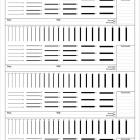
I have a great book from 1930 called 'Henley's Twentieth Century Formulas, Recipes and Processes'. Amongst the other wonderful things in there are scratch recipes for at least 18 different types of ink. Most appropriate for FPN is the single page section on 'writing ink', which I have scanned and attached here.


I'm not sure how legible it will be but if you are interested and can't read it, let me have your e-mail address and I'll mail you the jpg file, size about 826k, which should be OK.


Andy

Link to comment
Share on other sites

Most appropriate for FPN is the single page section on 'writing ink', which I have scanned and attached here.

Ouch! No Way! :o These call for gum arabic and other ingredients that have no business in a fountain pen. The gum arabic alone will clog your pen in a flash, at least until the other ingredients eat up the innards of the pen.


So glad the author advises the reader to strain the stuff through a hair sieve "after defecation." :blink: Those old inkmeisters must have been tough hombres. Keep it in a bunged cask indeed! I had to resort to looking it up in the dictionary to be sure he didn't mean what I thought he meant on first reading. :blush:

Edited by BillTheEditor
Link to comment
Share on other sites

Sure!

Buy gallon-size bottles of the primary color inks from ink-jet ink refill manufacturers. Mix until desired color is obtained. Dilute with distilled water if necessary, add a combined biocide-flow enhancer like InkSafe and you are in the ink business. Buy bottles, print labels, etc...

I think, if you look around, you can buy small quantities of aniline water soluble dyes. But then, if you can not make the dye and have to buy it from another source, your really not "making" ink, your just assembling it.


Small point, but I think it is important because I don't think anyone actually made pen kink once we got out of the middle ages. It is a labor intensive process that is best farmed out to specialists while the writer spends his time on more productive tasks, like writing or copying.

YMMV

Link to comment
Share on other sites

tryphon's suggestion sounds like a good one.


As for me, I'm still trying to get through all the noodler's.

Isn't sanity really a one-trick pony, anyway? I mean, all you get is one trick, rational thinking! But when you're good and crazy . . . ooh hoo hoo hoo! . . . the sky's the limit!

--The Tick

Link to comment
Share on other sites

Whatever happened to the Open Source Ink project? The bulletin board at http://www.kyder.com appears to be offline? Is it archived somewhere? Very good information on inks and ink manufacture there.


Too bad if it is gone....

P.,

Pennshoppen - quality pens, inks and paper


Pennshoppen - www.penshop.se

Reservoarpennor - Reservoarpennor.se

Bloggen - Pennshoppens blogg

On facebook and twitter as well @pennshoppen

Link to comment
Share on other sites

Lee Valley sells aniline dyes for staining wood that are dissolvable in water. If you guys are really adventurous they aren't too expensive and you can experiment in your el-cheapo pens.

"By all means marry; if you get a good wife, you'll be happy. If you get a bad one, you'll become a philosopher. "

- Socrates

Link to comment
Share on other sites

So, aninline is for color? What if we want to make plain old black ink?


does the main/best black come from soot?


archer

Link to comment
Share on other sites

So, aninline is for color? What if we want to make plain old black ink?


does the main/best black come from soot?


archer

Aniline dyes come in black as well as in color. Soot (technically, lampblack) is only used for inks or paints that are to be used in dip pens or brushes. The carbon particles would pack up in your feed and clog the pen.

Link to comment
Share on other sites

Very interesting idea. Hm, they seem to be missing a true green for additive mixing or a magenta for subtractive mixing...


Stephen

Current Favorite Inks

Noodlers La Reine Mauve Noodlers Walnut

Link to comment
Share on other sites

There is an older topic thread here on the FPN that went into great detail about making ink for fountain pens. I have to log off now, but I think you can find it by searching for posts by 'aunt rebecca'.

Link to comment
Share on other sites

Create an account or sign in to comment

You need to be a member in order to leave a comment

Create an account

Sign up for a new account in our community. It's easy!

Register a new account

Sign in

Already have an account? Sign in here.

Sign In Now


×
×
  • Create New...